

Switching managers can hinge on a single contract clause. Some vacation rental management agreements require 30-90 days’ notice to switch providers, so the most useful questions to ask a vacation rental manager include how termination works and when notice takes effect. The written agreement should make the exit terms clear before you commit.
Fees matter, but they are only part of the picture. You’ll also want to understand what management covers, which charges are separate, how cleaning and inspections are handled, and how to end the arrangement if it no longer fits. This checklist covers those details, along with repairs, reporting, and contract terms that can help avoid surprises. Clear answers make it easier to compare a service with the care your home needs.
Key Takeaways
- Ask what guest damage protection and liability coverage include, and how repairs or emergencies are handled.
- Request a clear breakdown of the management fee and any separate charges for maintenance, emergency calls, or supplies.
- Read the termination clause closely: agreements may require 30-90 days’ notice to switch managers.
- Clarify how cleaning quality and property inspections are tracked so you can understand how the home is cared for between stays.
Guest damage protection and liability coverage
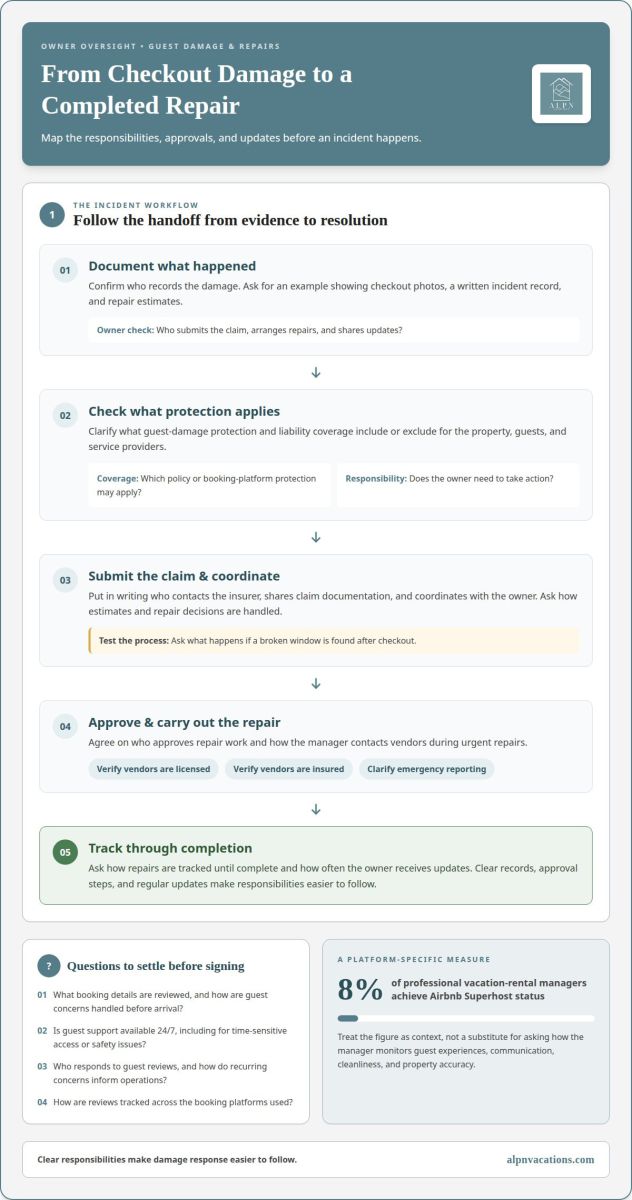
Ask how guest damage is documented and handled, including what protection covers and excludes. Useful questions to ask a vacation rental manager include: “Who records damage, who submits a claim, and who arranges repairs?” Request an example of the process, from checkout photos and estimates to owner updates. That sequence shows how the manager and owner work together when damage occurs.
Clarify how the manager handles liability coverage and what protection applies to the property, guests, and service providers. Ask which policy or booking-platform protection may apply, what exclusions there are, and whether the owner needs to take action. Get the process in writing, including who contacts the insurer and how repair decisions are approved. A specific example, such as a broken window found after checkout, can reveal unclear responsibilities.
- Ask about vendor credentials. Confirm whether repair vendors are licensed and insured, and how that status is checked.
- Ask about urgent repairs. Find out how the manager handles emergencies, contacts vendors, and reports the repair to you.
- Ask about guest screening. Learn what booking details are reviewed and how concerns are handled before arrival.
- Ask about support hours. The guidance recommends choosing a manager available to guests 24/7, including for time-sensitive access or safety issues.
- Ask about reviews. Discuss who responds to guest feedback and how recurring concerns inform operations.
Ratings can offer context, but ask what they reflect: recent guest experiences, communication, cleanliness, or property accuracy. Airbnb Superhost status is one platform-specific measure; the industry fact provided says 8% of professional vacation-rental managers achieve it. Treat that figure as context, then ask how the manager tracks reviews across the platforms used for bookings.
Ask how guests report damage and how repairs are tracked through completion. A written incident record, clear approval steps, and regular owner updates make responsibilities easier to follow.
Management fees and additional charges
Ask whether the management fee is a flat rate or commission, and what amount it applies to. Questions to ask a vacation rental manager should also clarify how booking fees, taxes, and guest-paid charges appear in the calculation. A sample statement can show how a booking translates into an owner payout.
Next, define what the management arrangement covers. Full-service management may include marketing, bookings, guest communication, cleaning, and maintenance. Ask which tasks are included, who approves extra work, and how charges are recorded. For example, confirm whether routine restocking is included or billed separately.
- Identify added charges. Ask whether maintenance, emergency calls, or restocking supplies create separate costs, and how approval works.
- Clarify cleaning charges. Find out whether cleaning is charged to guests, deducted from owner proceeds, or handled another way.
- Review booking costs. Ask how platform charges and booking-related fees are shown, so you can distinguish them from management compensation.
- Assign tax responsibilities. Put in writing who files occupancy tax and who tracks the amounts collected.
Nightly rates can vary with season, holidays, and demand. Ask how the manager adjusts prices, whether dynamic pricing is used, and who approves changes. In Ouray, a quiet weekday and a holiday weekend may call for different rates. Ask how minimum stays and promotions affect revenue and bookings.
Reporting makes those decisions visible. Ask how often owners receive financial statements and performance updates; monthly reporting is common. Find out whether the statement separates rent, taxes, platform charges, cleaning, maintenance, and the management fee. Ask which measures inform rate changes, such as booking pace or occupancy, and how the manager explains shifts in rating or revenue.
For a clearer picture of owner-facing oversight, explore vacation rental management services and consider which reporting and cost details matter most for your property.
Contract terms, termination, insurance, and liability
Permits, taxes, insurance, and operating rules depend on the property’s location and circumstances. Before signing, list the applicable permits and local requirements, then specify in the contract who handles each task. Clarify who files occupancy tax, maintains insurance records, and communicates with insurers.
Read the term, renewal, exclusivity, and exit clauses together. Some vacation rental management contracts run for 12 months or longer and include automatic renewals. Agreements may require 30-90 days’ notice to switch providers. Note the notice method, when the notice period begins, and whether existing Airbnb bookings remain with the management company after termination.
- Define exclusivity. Identify whether the manager controls all bookings or only reservations from selected platforms.
- Set exit responsibilities. Specify who transfers listing content, booking records, guest messages, access details, and property documents.
- Clarify insurance roles. Record who reports an incident, shares claim documentation, and coordinates repair decisions.
- Write down tax duties. Name the party responsible for filing occupancy tax and maintaining related records.
A contract can reflect the services and responsibilities agreed between owner and manager. Put each adjustment in writing, including seasonal pauses, owner-use dates, repair approval limits, and procedures for accepted reservations. If you plan to use the home during a busy season, for example, specify how those dates are blocked and who updates the listing.
Set a review point before renewal. A clear performance baseline may be established by 90 days, giving both parties a point to assess bookings, communication, and agreed duties. If ending the relationship, follow the contract’s notice process and request a written handover schedule. That keeps upcoming stays and property operations organized during the transition.
Applicable permits and local operating rules depend on the property’s location and circumstances. The contract should assign responsibility for permits and requirements, occupancy-tax filing and records, and insurance records and insurer communications.
Cleaning, inspections, and operations tracking
Ask the manager to describe the turnover process from checkout to the next arrival. Which cleaning tasks are completed, who records them, and how are missed items addressed? A checklist, for example, can track kitchen surfaces, bathrooms, floors, and supplies. Clarify how clean linens are prepared, replaced, and checked before guests arrive. A defined process helps owners understand what happens between bookings.
Inspections should cover more than visible cleanliness. Ask how often the rental is inspected, what conditions are recorded, and how follow-up repairs are assigned. A documented walkthrough can flag a loose handrail or leaking tap before it disrupts a stay. Also ask who reviews completed work and where inspection notes are kept.
- Trace maintenance requests. Ask how guests report problems, who assigns the repair, and how completion is recorded.
- Request emergency reports. Find out what incident details owners receive and how preventative protocols address repeat problems.
- Check supplies and linens. Agree on how stock levels are tracked and who replenishes items between turnovers.
- Review property condition. Ask how cleaning findings, damage, and repair needs are separated in inspection records.
Operations tracking can connect a home’s condition with its performance. Ask which dashboard or reports show bookings, revenue, occupancy, guest reviews, and open maintenance tasks. Dynamic pricing and automated guest communication may support operations, but ask how changes and service issues are recorded. Clear records can help distinguish a slow booking period from a maintenance disruption.
Choose a reporting structure that lets you follow each issue from discovery to resolution. For example, an owner report might show an inspection note, the assigned repair, and its completion status. To discuss practical care and rental operations, explore vacation rental management options.
ALPN Vacations: Alpenglow Cabin – Rustic Mountain Retreat
ALPN Vacations provides tailored vacation rental management in Southwest Colorado, including Ouray. For owners weighing contract terms, property care, and reporting, its management service is a practical next step. ALPN’s rental portfolio includes Alpenglow Cabin – Rustic Mountain Retreat, Amphitheater Haus, Ouray Main Street Luxury Penthouse, and The Ouray Nook.
For owners, the next step is to discuss how management can fit the property and which responsibilities you want handled. For travelers, ALPN’s homes offer different settings for a mountain stay, from a rustic cabin to a refined penthouse.
Contact ALPN Vacations to discuss vacation rental management or explore available stays.
Make your next management decision with confidence
Questions to ask a vacation rental manager can do more than guide a meeting. They can help you define what a successful working relationship looks like for your property, from your preferred level of involvement to how decisions are communicated. Keep those priorities in mind as you consider your next step.
Start with your goals. Consider the guest experience you want to create, how closely you want to oversee daily operations, and what information would help you feel confident about your home’s care. Sharing these priorities gives the conversation direction and focuses it on what matters to your ownership plans.
If you’re ready to explore whether ALPN Vacations is a fit for your rental, contact ALPN Vacations to discuss your rental. A thoughtful next step can bring greater clarity to the path ahead and help you move forward with confidence.
Frequently Asked Questions
How quickly can I switch providers if I’m unhappy?
Switching may take 30-90 days’ notice, depending on the management agreement. Check whether notice must be delivered in a specific way and whether the period starts upon receipt. Then map the handover: identify upcoming reservations, transfer guest details and access instructions, and confirm who updates listings. This helps prevent confusion for guests arriving during the transition.
What questions should I ask before hiring?
Ask how the manager’s approach fits your property, priorities, and preferred level of involvement. If you want to reserve dates for personal use, for example, clarify how they are coordinated with existing bookings. Ask who makes day-to-day decisions, how owner requests are recorded, and what information you’ll receive. The answers can show whether the arrangement fits your expectations.
What’s a fair commission for management services?
A fair commission has a clear calculation and scope that matches the work performed. Compare which revenue the percentage applies to, how adjustments are handled, and which responsibilities fall outside the fee. The amount depends on the property and management scope, so request a quote. Compare the overall arrangement, not just the headline rate.
Will hiring a manager really increase my revenue?
A manager can influence revenue through listing quality, booking distribution, rate adjustments, and guest experience. These factors affect a property’s ability to attract reservations, while operating expenses and seasonal demand also shape the owner’s net income. Ask what performance measures the manager tracks and how decisions change when bookings slow. Review revenue alongside occupancy and costs, rather than judging results by one figure alone.
What should I ask a vacation rental manager before hiring them?
Ask for a realistic example of how the manager would handle a situation specific to your home. A steep driveway, delicate furnishings, or limited storage may affect guest instructions and operating plans. Ask how those details are shared with guests and the people preparing the property. The answer can show whether the manager has considered the practical experience of staying in and caring for your rental.
What services are included in vacation rental management fees?
Services vary by agreement, so ask for a written scope that connects each task with the person responsible. Clarify whether the manager coordinates or performs housekeeping, and whether maintenance coordination means arranging work, approving it, or both. Ask how exceptions are documented and billed. A task-by-task description helps you understand what the management fee covers and where owner decisions are still needed.